For electrical workers, four hours can sound either refreshingly efficient or suspiciously short, depending on how many compliance courses they have sat through. A good LVR CPR class does not try to turn half a day into a lecture marathon. It is a focused, practical session built around one urgent workplace scenario: someone has been exposed to electricity at or near a live low voltage panel, and the responder needs to act quickly without becoming the next casualty.
First Aid Pro’s CPR LVR course runs for 4 hours and is delivered face to face, with no online pre-learning. That matters. Low voltage rescue training is not a topic most people absorb well through slides alone. The physical sequence, the pressure of checking for danger, the decision-making around isolation, the use of rescue equipment, and the CPR component all benefit from being taught in person, watched closely, and corrected immediately.
The course combines UETDRMP018 Perform rescue from a live low voltage panel with HLTAID009 Provide CPR. UETDRMP018 is the current nationally recognised unit for low voltage rescue and supersedes the older UETDRMP007 unit as an equivalent replacement. You may still hear people refer to “LVR”, “CPR LVR”, “LVR CPR”, or even older unit codes on worksites. In practical terms, if you are booking current low voltage rescue training, UETDRMP018 is the unit name to look for.
Why the course is only 4 hours
A 4-hour CPR LVR course is short because it is deliberately narrow. It is not a full first aid course, not an electrical theory class, and not a substitute for trade training. It is designed for people who already work in environments where electrical risk is real and who need a current, practical response qualification covering CPR and low voltage rescue.

The best way to understand the timing is to think of the course as compressed around performance. There is enough theory to support safe action, but not so much that the class loses its practical edge. Participants are expected to engage physically with the rescue process and CPR assessment, not simply listen and sign an attendance sheet.
The 4-hour format also reflects the annual nature of the training. First Aid Pro states that certificates are valid for 12 months and recommends regular, annual refreshers. That rhythm makes sense. CPR skill retention drops over time, and emergency actions around electrical incidents need to feel familiar before they are needed. Nobody wants their first serious recall of an LVR rescue process to happen while a co-worker is down near a switchboard.
A shorter course can work well when it is current, practical, and repeated regularly. The trade-off is that learners need to arrive ready to participate. There is no online pre-learning to complete beforehand, so the class itself has to cover the required content and assessment within the scheduled window. People who turn up late, unprepared to kneel for CPR practice, or distracted by work calls will feel the squeeze more than someone who arrives on time and treats the four hours as hands-on safety training.
Who typically needs LVR CPR training
The course is aimed at people whose work may put them near energised electrical equipment or in workplaces where electrical rescue capability is part of the safety system. First Aid Pro identifies electricians, electrical workers, workplace safety officers, builders, construction workers, mining professionals, and energy personnel as typical participants.
That range is broader than some people expect. An electrician may need the unit because it is linked to licence, employer, or site requirements. A supervisor may need it because they are responsible for emergency readiness on a job. A builder or construction worker may be operating in an environment where temporary boards, plant, leads, and changing site conditions introduce electrical hazards. In mining and energy settings, the combination of remote work, high consequence incidents, and strict site access rules can make current CPR LVR training essential.
The common thread is not job title alone. It is exposure to the risk. If a person may be expected to respond to an electrical incident involving low voltage equipment, they need more than a general understanding that electricity is dangerous. They need a rehearsed response that prioritises their own safety, manages the rescue, and starts CPR if required.
In real workplaces, response roles are often shaped by who is present at the time. The qualified electrician might be in another part of the site. The safety officer may be first to arrive. A supervisor may need to control the area while another trained worker begins CPR. A well-run lvr course helps participants think through those moments, especially the hard line that rescuers must not rush in and make contact with a person who may still be connected to an electrical source.
What “face to face with no online pre-learning” changes
Some courses ask learners to complete online modules before attending a short practical session. First Aid Pro’s CPR LVR course is different because it is delivered face to face with no online pre-learning. For many workers, that is convenient. It avoids forgotten logins, half-finished modules, and the common problem of people arriving at a practical session without having completed the prerequisite theory.
It also means the course room has to carry the whole learning experience. The trainer needs to move efficiently from explanation to demonstration to participant practice. The learners need time with the equipment, time on the CPR manikins, and enough repetition to build confidence. A good face-to-face session has a noticeable rhythm: explain the safety principle, show the action, let people perform it, then correct small errors before they become habits.
There is a practical advantage here. LVR rescue and CPR both involve body position, sequencing, and pressure. Watching a video of CPR compressions is not the same as delivering 2 minutes of uninterrupted CPR on an adult manikin placed on the floor. Reading about rescue from a low voltage panel is not the same as being asked to approach a scenario, identify danger, use the rescue process, and explain what you are doing under observation.
For employers, the face-to-face model can also make scheduling clearer. Workers are away from the job for the course block rather than juggling online pre-work over several days. That does not remove the operational cost, but it makes it easier to plan.
The likely shape of the 4 hours
The exact sequence of a class can vary by trainer, venue, group size, and participant experience. Still, the content has to support the two nationally recognised units being delivered: UETDRMP018 and HLTAID009. In plain terms, the session needs to cover low voltage rescue and CPR, then assess that participants can perform the required skills.
A typical class begins with enrolment checks and housekeeping. That first stretch is not glamorous, but it matters. The trainer needs to confirm attendance, explain expectations, set safety boundaries for the practical components, and usually get a quick read on the group. A room full of experienced electricians renewing their CPR LVR certificate may move differently from a mixed group of safety staff, construction workers, and newer electrical workers.
The LVR component generally sits best when it is grounded in workplace reality. A live low voltage panel scenario is not treated as a heroic rescue moment. It is treated as a controlled emergency where the rescuer must manage danger first. Participants learn or refresh how to think before acting, how to avoid direct contact with the casualty if there is ongoing electrical risk, and how to work through the rescue process in a way that protects the responder.
Then comes the CPR component. HLTAID009 Provide CPR is not a discussion-only unit. Assessment evidence includes at least 2 minutes of uninterrupted CPR on an adult manikin placed on the floor. That floor-based requirement can surprise people who have only practised on benches in informal workplace demonstrations. In the course, learners must be physically able to kneel, position themselves, and deliver compressions effectively for the required period.
Some groups underestimate how demanding 2 minutes can feel. It is not an endurance event, but proper compressions take effort. People who work physically demanding jobs often do fine, yet even fit participants can rush the rhythm or shorten compression depth when fatigue creeps in. A trainer watching closely will correct hand position, body angle, recoil, and consistency. Those corrections are the value of being in the room.
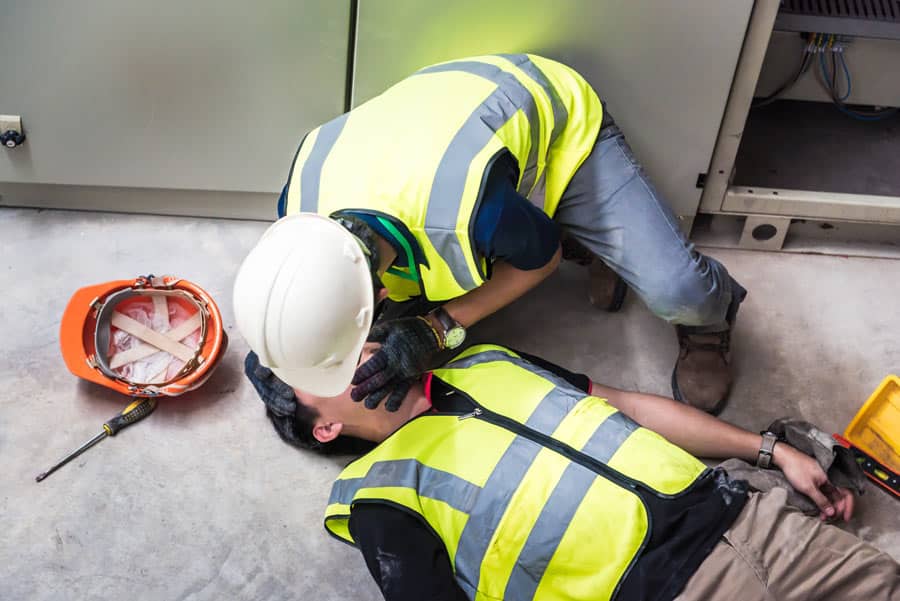
Assessment is usually woven through the course rather than saved entirely for the end. Trainers observe performance during practical activities, ask questions, and confirm understanding. Because the public duration is 4 hours, there is limited slack. If a participant needs extra coaching on CPR technique, the trainer will usually address it immediately so the person has a fair chance to meet the required standard within the session.
What you should be able to do physically
The Homepage most https://finncvgc722.cavandoragh.org/cpr-lvr-assessment-demands-cpr-on-the-floor-as-well-as-low-voltage-rescue-skill-sets important physical expectation is CPR on the floor. The HLTAID009 assessment evidence requires at least 2 minutes of uninterrupted CPR on an adult manikin placed on the floor. That is why First Aid Pro notes that learners must be able to perform CPR on the floor.
This is not a minor detail. If someone cannot kneel or cannot maintain the required position safely, they may not be able to complete the practical CPR assessment. People sometimes assume CPR training can be adapted entirely around their comfort, but nationally recognised assessment still has specific evidence requirements. If you have a knee injury, back issue, recent surgery, or mobility limitation, it is sensible to raise that with the training provider before booking rather than discovering the problem in class.
For most workers, preparation is straightforward. Wear clothing you can move in. Expect to kneel. Expect to use your upper body. If you are coming straight from site, think about whether your workwear is clean enough for a training room and practical floor activity. That is not a formal rule so much as common courtesy to other participants and the trainer.
The CPR component is also a useful reality check. In an electrical incident, the rescue itself is only the first part of the emergency. If the casualty is not breathing normally, effective CPR becomes time-critical. Practising compressions in a controlled class does not replicate the emotional stress of a real event, but it does build the muscle memory that helps people act instead of freeze.
What the low voltage rescue component is really about
Low voltage rescue is often misunderstood by people outside electrical work. The word “rescue” can make it sound like the main task is pulling someone away from danger. In proper low voltage rescue training, the main task is preventing further injury while creating a safe opportunity to assist the casualty.
That distinction matters. Electrical incidents can punish instinct. The natural human reaction is to grab the person and help. In an electrical context, that instinct can be fatal. The rescuer has to pause long enough to assess danger and follow a safe process. The course reinforces that the rescuer’s safety is not secondary to the casualty’s safety. It is the condition that makes any rescue possible.
UETDRMP018 focuses on performing rescue from a live low voltage panel. The current unit name is specific, and that specificity helps. Participants are not being trained for every possible electrical emergency in every possible environment. They are being trained around a defined low voltage rescue scenario with workplace application.
People who have completed older versions may remember UETDRMP007 or even earlier wording. UETDRMP018 supersedes and is equivalent to UETDRMP007, and it is described by First Aid Pro as replacing older UETDRRF004 and UETDRMP007 wording. If your employer, site, or licence documentation still uses an older name, it is worth checking exactly what they require, but the current nationally recognised unit is UETDRMP018.
Public classes, workplace groups, and the time question
For individuals, a public CPR LVR class is usually the simplest option. First Aid Pro lists public venues in several locations, including Brisbane, Logan Central, Sydney, Adelaide, and North Hobart. Public classes suit sole traders, workers renewing before a deadline, or employers sending one or two staff at a time.
For employers, onsite workplace delivery may make more sense. First Aid Pro states it can deliver onsite workplace CPR/LVR training for groups of 5 to 24 participants and offers flexible scheduling, with corporate training available for workplace and group delivery Australia-wide. That option can reduce travel time, keep training aligned with roster patterns, and make it easier to train a team that works together.
The trade-off is coordination. Onsite training needs an appropriate space and a group that can be available for the session. If people are pulled in and out to answer calls, unload deliveries, or deal with site issues, the training quality suffers. A 4-hour course is efficient, but it still needs protected time.
For teams, the group size can influence the feel of the session. A smaller group may allow more individual feedback and quicker movement through practical assessment. A larger group can still work well, especially with an organised trainer, but participants need to be attentive and ready when it is their turn. The key is not just getting everyone into a room. It is making sure everyone can complete the required practical work and assessment.
How to prepare without overcomplicating it
Because there is no online pre-learning, preparation is mostly practical. You do not need to spend the night before memorising electrical theory. You do need to arrive on time, bring any required identification or enrolment details requested by the provider, and be ready for physical participation.
A sensible pre-course check looks like this:
- Confirm the course you booked includes both UETDRMP018 and HLTAID009. Check the start time, venue, and parking or transport arrangements before the day. Wear clothing suitable for kneeling and CPR practice on the floor. Tell the provider early if you have a physical limitation that may affect CPR assessment. Allow the full 4 hours rather than planning calls or site visits during the session.
That short preparation can prevent most avoidable problems. The people who struggle logistically are often not the ones who find the content difficult. They are the ones who arrive late because they assumed the venue would be easy to find, or who book the course between two work commitments and spend the whole session watching the clock.
If you are attending at a public venue, check the specific address on your booking confirmation. First Aid Pro public venue information includes locations such as Level 8/117 Queen Street in Brisbane, Unit 9/84 Wembley Road in Logan Central, Level 15 Suite 1501/370 Pitt Street in Sydney, Level 2/50 King William Street in Adelaide, and 393 Argyle Street in North Hobart at Rydges Hobart with access via 15 Lewis Street. Venue details can matter more than people expect, especially in CBD buildings where lifts, reception access, and parking can add time.
Assessment: what “competent” looks like in practice
In nationally recognised training, attendance alone is not the point. The trainer needs evidence that participants can meet the requirements of the units. In a CPR LVR course, that means demonstrating practical capability and underpinning knowledge relevant to CPR and low voltage rescue.
For the CPR unit, the adult manikin floor requirement is a clear example. A participant must perform at least 2 minutes of uninterrupted CPR on an adult manikin placed on the floor. The trainer is not looking for theatrical urgency. They are looking for safe, effective technique performed consistently enough to satisfy the assessment requirement.
For the low voltage rescue unit, competence is about safe sequence and judgment. A participant who rushes straight to the casualty without dealing with danger has missed the central safety principle. A participant who can explain the hazard but cannot perform the rescue process under observation also needs more practice. The course brings those two sides together: knowing what to do and being able to do it.
Experienced workers sometimes assume renewal will be automatic because they have held the ticket for years. Experience helps, but it can also create shortcuts. A good trainer will still expect the process to be demonstrated properly. That may feel repetitive to someone who has done annual lvr cpr training for a decade, but repetition is exactly why the response stays available under stress.
Newer workers face a different challenge. They may be less familiar with the worksite context and more nervous about the assessment. For them, the 4-hour format can still be enough, provided they listen closely and use the practice time. Asking a direct question in class is better than quietly hoping the assessment will avoid the area they are unsure about.
Certificate timing and renewal cycle
First Aid Pro states certificates are issued same day and are valid for 12 months. Same-day issuing is useful for workers who need evidence quickly for site access, employer records, or compliance checks. If your renewal is close to expiry, that can make the difference between staying rostered and being delayed.
The 12-month validity period is also worth treating seriously. CPR LVR is not the kind of qualification to renew whenever it becomes convenient. Many workers set a reminder a few weeks before expiry, especially if their employer does not manage it centrally. Leaving it until the last day creates unnecessary pressure, particularly if public course dates fill or work rosters change.
Annual refreshers are not only administrative. CPR and low voltage rescue skills are perishable. Even if the broad ideas stay in memory, small details fade. Hand position becomes less exact. The rescue sequence feels less immediate. People hesitate longer. Annual cpr lvr training helps keep the response current enough to be useful.
Some employers choose to renew whole teams together through onsite training. Others stagger renewals so there is always coverage across shifts. Neither approach is automatically better. Group renewal is efficient and builds shared expectations. Staggered renewal can reduce disruption and avoid a situation where everyone expires at once. The right choice depends on the workplace, roster structure, and compliance requirements.
Cost, value, and what you are really paying for
First Aid Pro’s public pages indicate a $99 public price for the course, with some pages showing limited-time discount pricing on selected dates. Prices can change, so the booking page is the place to confirm the current amount before enrolling.
The value of the course is not just the certificate. The certificate matters, of course. Workers often need it to meet employer, licence, or site requirements. But the real value sits in the practical rehearsal. For less than the cost of many routine tools or site expenses, a participant spends four focused hours refreshing the actions that may protect a colleague during an electrical emergency.
That said, price should not be the only booking factor. Location, date availability, certificate timing, current unit codes, and delivery mode all matter. A cheaper course that does not meet the required units or creates delays in receiving evidence can cost more in lost work time. A convenient course that includes UETDRMP018 and HLTAID009, runs face to face, and issues same-day certificates may be the better operational choice.
Employers should also consider hidden costs. Sending ten workers separately to public sessions may be easy administratively but inefficient in travel and downtime. Bringing a trainer onsite for an eligible group can reduce disruption, provided the workplace can protect the training time. The advertised group range of 5 to 24 participants gives employers a useful planning bracket.
Common misunderstandings about CPR LVR courses
One common misunderstanding is that “low voltage” means low risk. In electrical safety, low voltage does not mean harmless. The term has a technical context, and the risk in a live panel scenario remains serious. The course exists because the consequences of getting the rescue wrong can be severe.
Another misunderstanding is that CPR LVR is just CPR with an electrical label added. The CPR component is essential, but lvr training adds a specific rescue context. The responder has to manage electrical danger before casualty care can proceed safely. That extra layer changes the first decisions in the emergency.
A third misunderstanding is that online theory could replace the practical session. For some training topics, online learning works well. For this one, First Aid Pro’s face-to-face, no pre-learning format is a strength because it keeps the focus on observed performance. The trainer can see whether a participant actually performs CPR effectively and whether the low voltage rescue process is understood in action.
There is also occasional confusion around unit names. People may ask for an lvr course, cpr lvr course, lvr cpr, low voltage rescue course, or low voltage rescue training. Those phrases often point to the same workplace need, but the unit names matter. For current nationally recognised training, check for UETDRMP018 Perform rescue from a live low voltage panel and HLTAID009 Provide CPR.
Making the most of the four hours
A 4-hour course rewards attention. The content is not difficult in the academic sense, but it is unforgiving of casual participation. Every part of the session connects to the same emergency chain: recognise danger, avoid becoming a casualty, perform the low voltage rescue process safely, assess the casualty, and provide CPR if needed.
You can get more from the session by treating it as a rehearsal rather than a compliance chore. When the trainer describes a scenario, picture your own workplace. Think about where panels are located, who normally works nearby, how quickly help can arrive, and what distractions would exist in a real incident. If something in the training does not map neatly to your site, ask about it. That is where useful professional judgment develops.
For supervisors and safety officers, the course can also expose gaps beyond individual skill. Training one person is helpful. Making sure rescue equipment is accessible, workers know emergency arrangements, and renewals are tracked is a broader workplace responsibility. The class itself may not cover every site-specific procedure, but it can prompt the right internal questions.
A useful mental checklist after the course is simple:
- Is my certificate saved somewhere I can access quickly if asked? Do I know my renewal month, not just the expiry year? Does my workplace know who currently holds CPR LVR? Are our emergency arrangements clear to the people most likely to respond? Would I feel confident acting safely near a low voltage panel incident today?
Those questions move the training from a certificate into workplace readiness. They also help identify whether the next step is individual renewal, team training, or a conversation with management about emergency planning.
The practical expectation
The most accurate expectation for a 4-hour face-to-face LVR CPR class is focused, physical, and assessment-driven. You will not spend a full day in a classroom. You will not complete online pre-learning beforehand. You will attend in person, work through low voltage rescue and CPR content, and demonstrate the skills required for UETDRMP018 and HLTAID009.
For many electrical and construction-related workers, that format is a good fit. It respects time without reducing the training to a tick-box exercise. It gives experienced workers a structured annual refresh and gives newer workers a clear, supervised introduction to the response expected around live low voltage panel incidents.
The certificate is valid for 12 months, and same-day issue means the administrative side can be straightforward. The more important outcome is less visible: a worker leaving the room with the rescue sequence fresh, CPR technique corrected, and the confidence to pause, assess, and act safely when the pressure is real.